













Policies and procedures
We document critical business processes, define roles and control points, eliminate process gaps and verify that employees understand the operating standards.
When processes are not documented, managers repeatedly answer the same questions and explain the same work from scratch.
Clear procedures reduce recurring errors, define responsibility and give management a basis for monitoring execution.
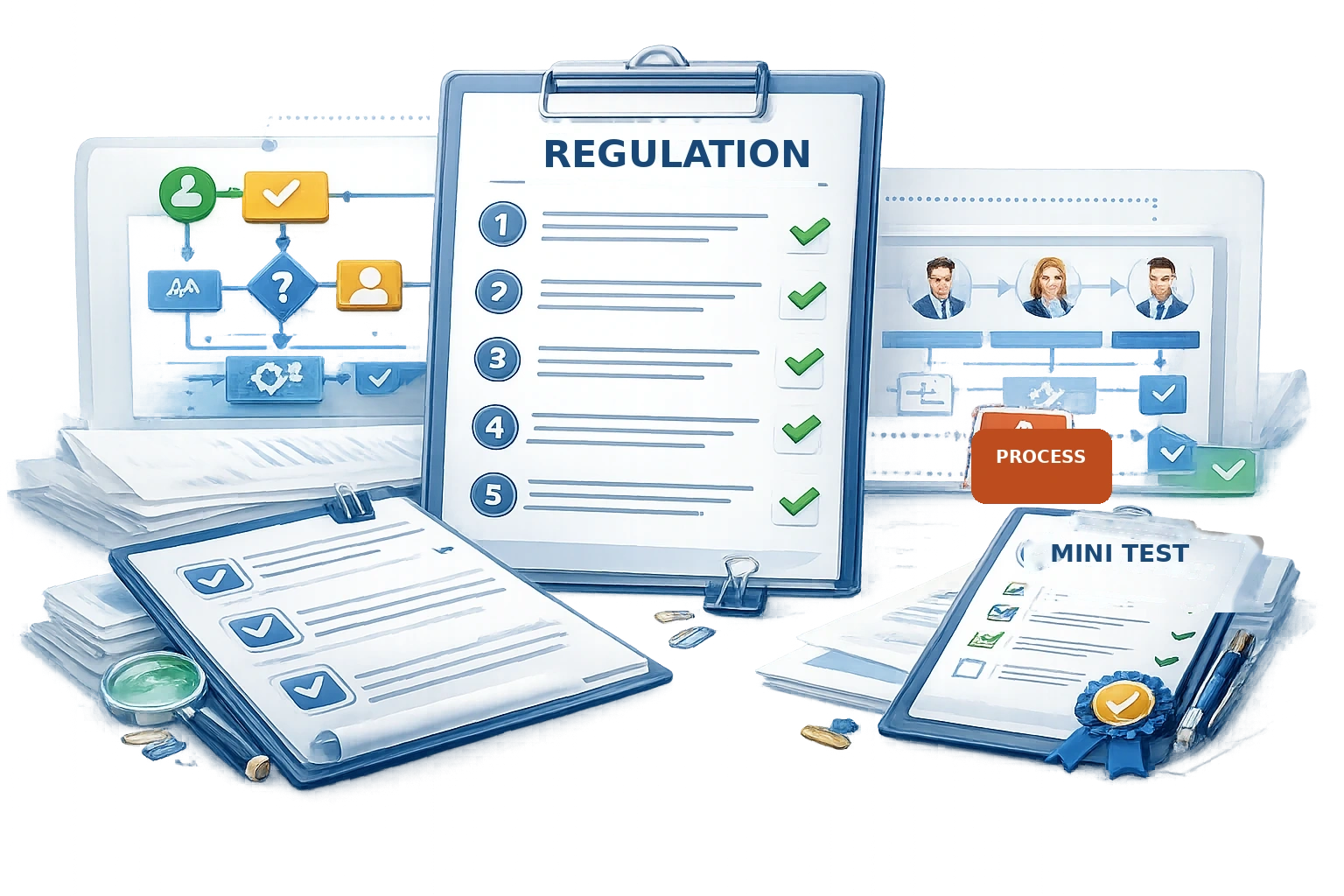
WHAT BUSINESS PROCESS DOCUMENTATION INCLUDESprocess map → gaps → procedure → knowledge assessment
01Process maps: document the sequence, roles, inputs and outputs
02Process gaps: identify breakdowns, duplication and missing controls
03Operating procedures: define the required way of performing the process
04Knowledge assessment: verify that employees understand the procedure
WHY PROCEDURES ARE NEEDED
Clear processes and responsibilities across the company
Policies and procedures define how work is performed, who is responsible for each stage and what result is expected.
WHEN PROCESSES ARE NOT DOCUMENTED
The same questions, recurring errors and unclear responsibility
When processes are not documented, employees repeatedly ask how work should be done, managers explain the same steps again, and errors or deliberate non-compliance remain difficult to identify and correct.

Repeated questions
Employees repeatedly ask how standard processes should be performed.

Repeated explanations
Managers spend time explaining the same sequence of work to different employees.

Recurring errors
The same mistakes reappear because the correct method is not documented or reinforced.

Deliberate non-compliance
Some employees knowingly bypass the agreed process when accountability is unclear.

Direct impact on business results
Process failures increase cost, delay work and affect revenue or profit.

Limited management visibility
Management cannot reliably compare actual execution with the required standard.
SOLUTION MAP
What the process documentation system includes
We map the process, identify gaps, define the operating standard, assign responsibilities and verify employee understanding.
Process maps
document the sequence, inputs, outputs, roles and handoffs
- business processes
- process steps
- inputs and outputs
Company-wide processes
document cross-functional processes that involve several departments
- cross-functional flow
- handoffs
- process owners
Department processes
document recurring work within each department
- department workflows
- roles
- expected deliverables
Process gaps
identify missing steps, duplicated work, weak handoffs and control gaps
- gaps
- duplication
- missing controls
Improvement actions
define changes required to remove the identified process gaps
- corrective actions
- process redesign
- implementation priorities
Operating procedures
document the required way of performing each critical process
- procedure
- roles
- acceptance criteria
Knowledge assessment
verify that employees understand the procedure and their responsibilities
- assessment
- procedure knowledge
- employees
Responsibility model
define process owners, role responsibilities and handoff accountability
- process ownership
- roles
- handoffs
SOLUTION ARCHITECTURE
Discuss process documentation
Business process documentation architecture
The system links the process map, identified gaps, operating procedure, role responsibilities and employee knowledge assessment.
Process maps
sequence, inputs, outputs, roles and handoffs
Gap analysis
breakdowns, duplication, unclear ownership and missing controls
Operating procedures
required steps, responsibilities, evidence and acceptance criteria
Knowledge assessment
verification that employees understand the procedure and their role
SYSTEM ELEMENTS
From process map to employee knowledge assessment
The process documentation system includes the following elements:
Process map
sequence, roles, inputs, outputs and handoffs
map · process · handoffsBusiness processes
critical company and department workflows selected for documentation
company · departments · prioritiesProcess gaps
breakdowns, duplication, delays and missing controls
gaps · risks · controlsImprovement actions
changes required to eliminate identified gaps
actions · redesign · prioritiesOperating procedure
documented standard for performing the process
procedure · roles · criteria
Knowledge assessment
verification that employees understand the procedure
assessment · employees
Consistency
one agreed way of performing recurring work
standards · repeatability
Accountability
defined process owners, responsibilities and handoffs
owners · roles · handoffsPolicies and procedures
Documented processes create a shared operating standard for managers and employees.
The scope of documentation is based on process criticality, recurring errors and management priorities.
WHAT CHANGES
Processes become clear, repeatable and controlled
Employees understand the required sequence of work, managers see responsibilities and control points, and recurring errors can be identified and corrected.
PROCEDURES IN PRACTICE
Documented processes and clear responsibilities
The documentation package shows how the process works, where gaps exist, who is responsible and how employee understanding is verified.
Process maps
document the sequence, roles, inputs, outputs and handoffs
Gap analysis
identify breakdowns, duplication, delays and missing controls
Process improvement
define corrective actions and process changes
Operating procedure
document the required sequence, responsibilities and acceptance criteria
Knowledge assessment
verify employee understanding of the procedure
Responsibility model
define process owners, role responsibilities and handoffs
HOW WE DEVELOP THEM
From process map to knowledge assessment
We document the current process, identify gaps, design the required procedure and verify employee understanding.
1
Process mapping
document the current sequence, roles, inputs, outputs and handoffs
2
Gap analysis
identify breakdowns, duplication, delays and missing controls
3
Process improvement design
define the changes required to eliminate the gaps
4
Procedure development
document the required process, roles and acceptance criteria
5
Knowledge assessment
verify that employees understand the procedure and their responsibilities
WHAT THE CLIENT RECEIVES
A complete business process documentation package
Process maps
documented sequence, roles, inputs, outputs and handoffs
Gap analysis and improvement actions
identified gaps, risks and agreed corrective changes
Operating procedures
documented standards, responsibilities and acceptance criteria
Knowledge assessment
materials and results confirming employee understanding
NEXT STEP
Document critical business processes
We will map the processes, identify gaps, define operating procedures and verify employee understanding.
- document process steps, roles, inputs, outputs and handoffs;
- identify gaps and define corrective process changes;
- develop procedures and assess employee knowledge.
Discuss process documentation
The result is a shared operating standard that employees can follow and managers can monitor.